Day 1 Part 1
Those who interact with Intersection Magazine should now know that we have tried to find the best events and cover them. As such there has been quite a critical look at the more prominent conferences and meetups with the aim of trying to crack the code that results in the most useful experiences.
Beyond Headlines: Debunking Myths in Africa VC| Enza Capital
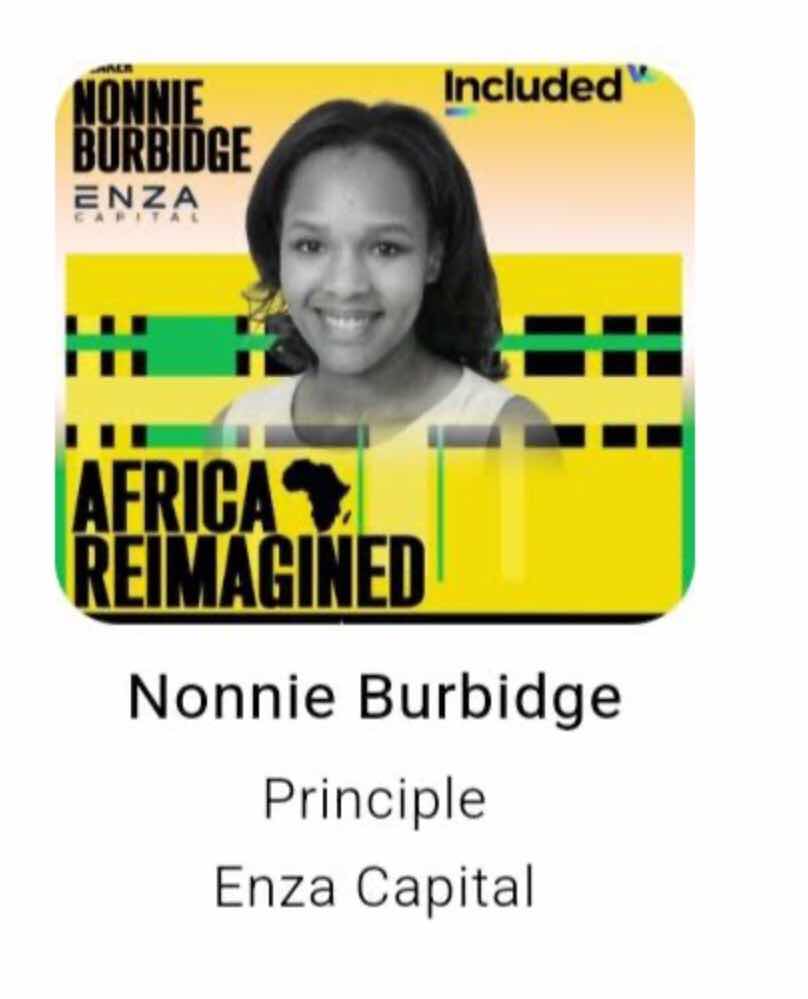
- The first myth is that VC has not arrived in Africa. The reality is that Billions have been invested creating several unicorns, deals and exits. Side Note: In the startup world, animal metaphors are used to categorize and understand different types of companies, often reflecting their business models and valuations. The most famous is the "unicorn," a privately held startup valued at $1 billion or more, representing rare and high-value ventures. Other metaphors include camels, zebras, cockroaches, and donkeys, each with distinct characteristics reflecting different approaches to growth, funding, and profitability.
Here's a breakdown of some common animal metaphors in startups:
1. Unicorn:
- Meaning: A privately held startup valued at $1 billion or more.
- Characteristics: Typically associated with rapid growth, high valuations driven by venture capital, and a focus on achieving market dominance.
- Example: Many tech companies, especially those in e-commerce, AI, or fintech, can be categorized as unicorns.
2. Camel:
- Meaning:
Startups that prioritize financial stability, resourcefulness, and potentially slower growth but greater sustainability. - Characteristics:
Exhibit good unit economics, can weather economic shocks, and are less reliant on venture capital. - Example:
Companies focused on long-term customer relationships, sustainable business models, and consistent revenue generation.
3. Zebra:
- Meaning:
Startups that focus on profitability and sustainable growth, balancing the pursuit of profits with a desire to make a positive impact. - Characteristics:
Prioritize sustainable business practices, social responsibility, and long-term viability over solely chasing high valuations. - Example:
Companies focused on mission-driven businesses, social impact ventures, or businesses that prioritize customer satisfaction over purely financial gains.
4. Cockroach:
- Meaning:
Startups that can thrive in harsh or challenging environments, often demonstrating resilience and adaptability. - Characteristics:
Able to survive downturns, operate on lean budgets, and adapt quickly to changing market conditions. - Example:
Companies that can thrive in competitive markets, even if they are not valued as highly as unicorns.
5. Donkey:
- Meaning:
Startups that are often characterized as slow or stubborn, potentially lagging in growth or adaptation. - Characteristics:
May have difficulty adapting to market changes or quickly scaling their operations. - Example:
Companies that are resistant to change or struggle to adapt to new technologies or business models.

- Africa’s population is 1.5 Billion-but is the market massive? This is the second myth that the presenter dealt with. Population numbers do not always translate to revenue or buying power or use. A good example is the comparison between Boston and Kenya. The former is smaller but has a larger GDP than the latter.
- A strategy for scaling. While the temptation to scale nationally will present itself the expert from Enzo Capital suggests instead that you scale city by city. There are three main points that she uses to strengthen this idea. The first is that Africa is the sum of its parts as a result, minimal synergies exist between African countries. Secondly, scaling takes place with one of two paths. Either by Mergers and Acquisitions or by brute force Market Entry. Thirdly, there is the larger effect of regional treaties especially in this case AFCTA (Africa Continental Free Trade Agreement).
- Big numbers don’t always mean big business. Here there is an examination of GMV, Real Revenue and Margins. GMV stands for Gross Merchandise Value, and it's a metric that measures the total monetary value of all goods or services transacted by a company or on a marketplace. It's calculated before any deductions like fees, commissions, or returns.
Here's a more detailed breakdown:
- What it measures:
GMV is a key indicator of a company's overall sales volume and the health of its marketplace. - How it's calculated:
It's simply the total value of all sales, including the price of goods, the quantity sold, and any fees paid, but not including expenses or returns. - Why it's important:
GMV helps businesses understand their market share, growth trends, and overall performance. It's also used by investors to compare different companies and marketplaces. - Difference from Revenue:
While GMV represents the total value of goods sold, revenue is the amount of money a company actually makes after deducting all expenses, such as fees, commissions, and returns.
- The other consideration is domiciling. She titles it as Delaware, Mauritius or onshore Africa. In a business context, "domicile" refers to the legal address or location where a company is registered and legally recognized.This is often the company's headquarters or the state where it is incorporated. The domicile determines the legal jurisdiction and may impact taxation, among other factors.
Elaboration:
- Legal Address:
The domicile is the official legal address of the business, where it can be served with legal documents and where its existence is legally recognized. - Tax Implications:
A company's domicile can influence its tax obligations, as it often determines which jurisdiction's tax laws apply to its income and activities. - Commercial Domicile:
This specific term in Corvee refers to the location where a company is registered for legal purposes, distinct from where it might physically operate. - Multiple Domiciles:
Businesses operating in multiple states or countries may have different commercial domiciles for different purposes, Corvee. - Not the Same as Residence:
A company's physical location where it conducts business (its "residence") is different from its legal domicile, which is its registered location.
The author goes through each of these different locations with pros and cons as well as shares some of the upcoming ones like Rwanda which is leading the way as a destination for conferences as well as attempting to make a mark for itself as a potential replacement for Mauritius.
- The other major assumption is that all startups in Africa are Fintechs. The truth is that Fintechs form a major percentage of all startups and capture the largest chunk of VC investment. The other factor that affects the numbers is the idea that most problem solving applications have a Fintech angle to them. Additionally those who are starting tend to use Fintech as a means of securing funding.
- The other ideas that dominate the landscape is the split between Profit and Impact. One of the advantages that exists and that is unique to the African setting is that most of our builders are creating and solving for real world problems. How many of these are funded is another challenge all together. The desire to make ends meet and the need to respond to trends such as AI or Climate Change for example can drive developers into the ‘wrong’ hands.

No comments:
Post a Comment